


Cross-domain transferability of deep learning models for building extraction from UAV imagery: a case study and benchmark in Vietnam

- Authors: Dung Trung Pham
Affiliations:
Hanoi University of Mining and Geology, Hanoi, Vietnam
- *Corresponding:This email address is being protected from spambots. You need JavaScript enabled to view it.
- Keywords: Building extraction, Domain gap, DeepLabV3+, UAV imagery, Urban morphology, Vietnam.
- Received: 20th-Jan-2026
- Revised: 8th-Apr-2026
- Accepted: 23rd-Apr-2026
- Online: 1st-Aug-2026
- Section: Geomatics and Land Administration
Abstract:
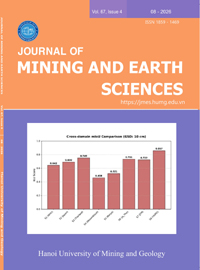
Automated building extraction from Unmanned Aerial Vehicle (UAV) imagery plays an important role in urban analysis and large-scale geospatial applications. However, models trained on international datasets often struggle when deployed in regions with distinct local urban morphologies. This study evaluates the cross-domain transferability of such models in the Vietnamese urban context. Rather than testing domain adaptation methods, the paper focuses on assessing the performance degradation of source-trained models relative to a localized baseline. Using the DeepLabV3+ architecture with a ResNet-18 backbone, models trained on representative global datasets were evaluated against the HUMG benchmark derived from UAV imagery in Vietnam. The results reveal a pronounced domain gap, with cross-domain Intersection over Union (IoU) values decreasing substantially and reaching as low as 0.642. Error analysis indicates that this degradation is primarily driven by the prevalence of high-density “tube houses,” which frequently cause instance merging and omission errors in non-localized models. In contrast, a model trained in local 10 cm resolution imagery achieved an IoU of 0.857. An efficiency plateau was also observed, whereby approximately 2,000 training samples (40% of the dataset) were sufficient to achieve near-optimal performance at very high resolution. To contextualize these findings within geospatial mapping practice, a simplified geometric model was introduced to explore the potential relationship between IoU and map-scale requirements. However, it is emphasized that overlap-based metrics provide only an indicative assessment and are insufficient to demonstrate regulatory compliance or full geometric validity. Overall, the study highlights the necessity of localized data for reliable building extraction in complex urban environments such as Vietnam.

Chen, J., Zhu, J., He, P., Guo, Y., Hong, L., Yang, Y., and Sensing, R. (2024). Unsupervised domain adaptation for building extraction of high-resolution remote sensing imagery based on decoupling style and semantic features. IEEE Transactions on Geoscience and Remote Sensing, 62, 1-17. 
Chen, L.-C., Papandreou, G., Schroff, F., and Adam, H. (2017). Rethinking atrous convolution for semantic image segmentation. arXiv. https://doi.org/10.48550/arXiv.1706.05587.
Deng, X., Liang, Y., Li, X., and Xu, W. (2023). Recognition and spatial distribution of rural buildings in Vietnam. Land, 12(12), 2142. https://doi.org/10.3390/land12122142.
Dias, P., Tian, Y., Newsam, S., Tsaris, A., Hinkle, J., and Lunga, D. (2022). Model assumptions and data characteristics: Impacts on domain adaptation in building segmentation. IEEE Transactions on Geoscience and Remote Sensing, 60, 1-18. https://doi.org/10.1109/TGRS.2022.3160000.
Fernandez-Moral, E., Martins, R., Wolf, D., and Rives, P. (2018). A new metric for evaluating semantic segmentation: Leveraging global and contour accuracy. 2018 IEEE Intelligent Vehicles Symposium (IV), 1041-1046. https:// doi.org/10.1109/IVS.2018.8500539
He, K., Zhang, X., Ren, S., and Sun, J. (2015). Spatial pyramid pooling in deep convolutional networks for visual recognition. IEEE Transactions on Pattern Analysis and Machine Intelligence, 37(9), 1904-1916. https://doi. org/10.1109/TPAMI.2015.2389824.
He, K., Zhang, X., Ren, S., and Sun, J. (2016). Deep residual learning for image recognition. Proceedings of the IEEE Conference on Computer Vision and Pattern Recognition (CVPR), 770-778.
Hu, D., Gan, V. J., and Zhai, R. (2024). Automated BIM-to-scan point cloud semantic segmentation using a domain adaptation network with hybrid attention and whitening (DawNet). Advanced Engineering Informatics, 164, 105473. https://doi.org/10.1016/j.aei.2024. 105473.
Iqbal, J., and Ali, M. (2020). Weakly-supervised domain adaptation for built-up region segmentation in aerial and satellite imagery. ISPRS Journal of Photogrammetry and Remote Sensing, 167, 263-275. https://doi.org/10. 1016/j.isprsjprs.2020.07.001.
Liu, Y., Gross, L., Li, Z., Li, X., Fan, X., and Qi, W. (2019). Automatic building extraction on high-resolution remote sensing imagery using deep convolutional encoder-decoder with spatial pyramid pooling. IEEE Access, 7, 128774-128786. https://doi.org/10.1109/ACCESS. 2019.2940527.
Nguyen, A., Luu, H., Phan, A., Bui, H., and Nguyen, T. (2019). Cau Giay: A dataset for very dense building extraction from Google Earth imagery. 2019 6th NAFOSTED Conference on Information and Computer Science (NICS), 401-406. https://doi.org/10.1109/NICS48861. 2019.9023812.
Nguyen, H. N., Dung, T. T. T., Hung, T. D., and Tuan, H. M. (2025). Deep learning-based segmentation of rooftop photovoltaic panels in Ho Chi Minh City, Vietnam. 2025 17th International Conference on Knowledge and System Engineering (KSE).
Padilla, R., Netto, S. L., and Da Silva, E. A. (2020). A survey on performance metrics for object-detection algorithms. 2020 International Conference on Systems, Signals and Image Processing (IWSSIP), 237-242. https://doi. org/10.1109/IWSSIP48289.2020.9145130.
Peng, J., Huang, Y., Sun, W., Chen, N., Ning, Y., and Du, Q. (2022). Domain adaptation in remote sensing image classification: A survey. IEEE Journal of Selected Topics in Applied Earth Observations and Remote Sensing, 15, 9842-9859. https://doi.org/10.1109/JSTARS.2022. 3221375.
Peng, X., Bai, Q., Xia, X., Huang, Z., Saenko, K., and Wang, B. (2019). Moment matching for multi-source domain adaptation. Proceedings of the IEEE/CVF International Conference on Computer Vision (ICCV), 713-722.
Song, S., Yu, H., Miao, Z., Zhang, Q., Lin, Y., and Wang, S. (2019). Domain adaptation for convolutional neural networks-based remote sensing scene classification. IEEE Geoscience and Remote Sensing Letters, 16(8), 1324-1328. https://doi.org/10.1109/LGRS.2019. 2895714.
Tuia, D., Persello, C., and Bruzzone, L. (2016). Domain adaptation for the classification of remote sensing data: An overview of recent advances. IEEE Geoscience and Remote Sensing Magazine, 4(2), 41-57. https://doi.org/10. 1109/MGRS.2016.2548504.
Vu, T. T., Matsuoka, M., and Yamazaki, F. (2005). Object-based extraction of buildings from very high resolution satellite images: A case study of Ho Chi Minh City, Viet Nam. Proceedings of the 26th Asian Conference on Remote Sensing (ACRS), 7-11.
Xu, G., Deng, M., Zhu, J., Sun, G., Gou, Z., Guo, Y., ... and Sensing, R. (2025). A dual-contrast adaptation network coupling global context and geometry information for cross domain building extraction. IEEE Transactions on Geoscience and Remote Sensing.
Yao, X., Wang, Y., Wu, Y., and Liang, Z. (2021). Weakly-supervised domain adaptation with adversarial entropy for building segmentation in cross-domain aerial imagery. IEEE Journal of Selected Topics in Applied Earth Observations and Remote Sensing, 14, 8407-8418. https:// doi.org/10.1109/JSTARS.2021. 3104505.
Zhang, F., Liu, K., Liu, Y., Wang, C., Zhou, W., Zhang, H., ... and Sensing, R. (2024). Multitarget domain adaptation building instance extraction of remote sensing imagery with domain-common approximation learning. IEEE Transactions on Geoscience and Remote Sensing, 62, 1-16.
Zhang, Y., David, P., and Gong, B. (2017). Curriculum domain adaptation for semantic segmentation of urban scenes. Proceedings of the IEEE International Conference on Computer Vision (ICCV), 2020-2030.
Zhang, Y., David, P., Foroosh, H., and Gong, B. (2019). A curriculum domain adaptation approach to the semantic segmentation of urban scenes. IEEE Transactions on Pattern Analysis and Machine Intelligence, 42(8), 1823-1841. https://doi.org/10.1109/TPAMI.2019.2902392.
Zhao, S., Zhou, X., and Hou, D. (2023). An anomaly detection-based domain adaptation framework for cross-domain building extraction from remote sensing images. Applied Sciences, 13(3), 1674. https://doi. org/10.3390/app13031674.
Zhuang, F., Qi, Z., Duan, K., Xi, D., Zhu, Y., Zhu, H., ... and He, Q. (2020). A comprehensive survey on transfer learning. Proceedings of the IEEE, 109(1), 43-76.
Other articles










 Journal of Mining and Earth Sciences
 Publishing Office - Hanoi University of Mining and Geology
 No.18 Vien Street - Duc Thang Ward - Bac Tu Liem District - Ha Noi
 Tel: (+84-24) 3219 1509 Fax: (+84-24) 3838 9633
  Email: jmes@humg.edu.vn